
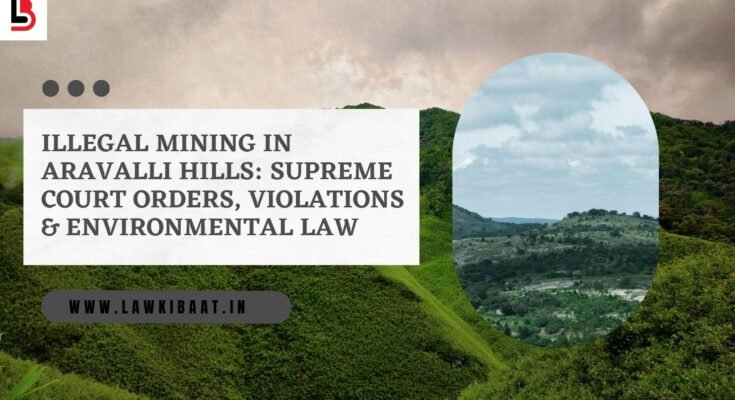
The Aravalli Hills, stretching across western and northern India, are among the oldest mountain ranges on Earth, predating even the Himalayas. Despite their immense geological, ecological, and climatic importance, the Aravallis have been subjected to decades of unchecked and illegal mining, particularly for construction minerals. This exploitation has scarred landscapes, depleted groundwater, worsened air pollution, and triggered repeated judicial intervention.
Over the years, the Supreme Court of India has played a decisive role in attempting to halt this ecological destruction through bans, monitoring committees, and policy directions. Yet, illegal mining continues to surface, revealing deep governance failures and weak enforcement of environmental law.
This blog examines the environmental importance of the Aravallis, the legal framework governing mining, Supreme Court orders, continuing violations, and the broader implications for environmental governance in India.
Why the Aravalli Hills Matter


The Aravalli range spans parts of Rajasthan, Haryana, Gujarat, and Delhi. Far from being barren rocky terrain, the hills serve several critical ecological functions:
1. Groundwater Recharge
The fractured rock system of the Aravallis allows rainwater to percolate and recharge aquifers. Mining disrupts this natural process by removing topsoil and rock layers.
2. Climate Regulation
The range acts as a barrier against desertification, slowing the spread of the Thar Desert and reducing dust storms in the Delhi-NCR region.
3. Biodiversity Habitat
Dry deciduous forests, scrublands, and seasonal water bodies within the Aravallis support diverse flora and fauna, many of which are vulnerable to habitat loss.
4. Air Quality Protection
By stabilizing soil and vegetation, the hills reduce particulate matter, playing a quiet but vital role in mitigating air pollution.
When mining destroys these hills, the damage is irreversible on human timescales.
Nature and Scale of Illegal Mining
Illegal mining in the Aravalli region typically involves:
-
Extraction without valid leases
-
Mining beyond permitted depth or area
-
Absence of environmental clearance
-
Night-time quarrying to evade detection
-
Use of explosives in prohibited zones
Entire hillocks have been flattened, forests cleared, and access roads carved illegally. While authorities periodically seize vehicles and file cases, such actions often fail to dismantle the organized networks behind illegal operations.
Environmental Damage Caused by Mining

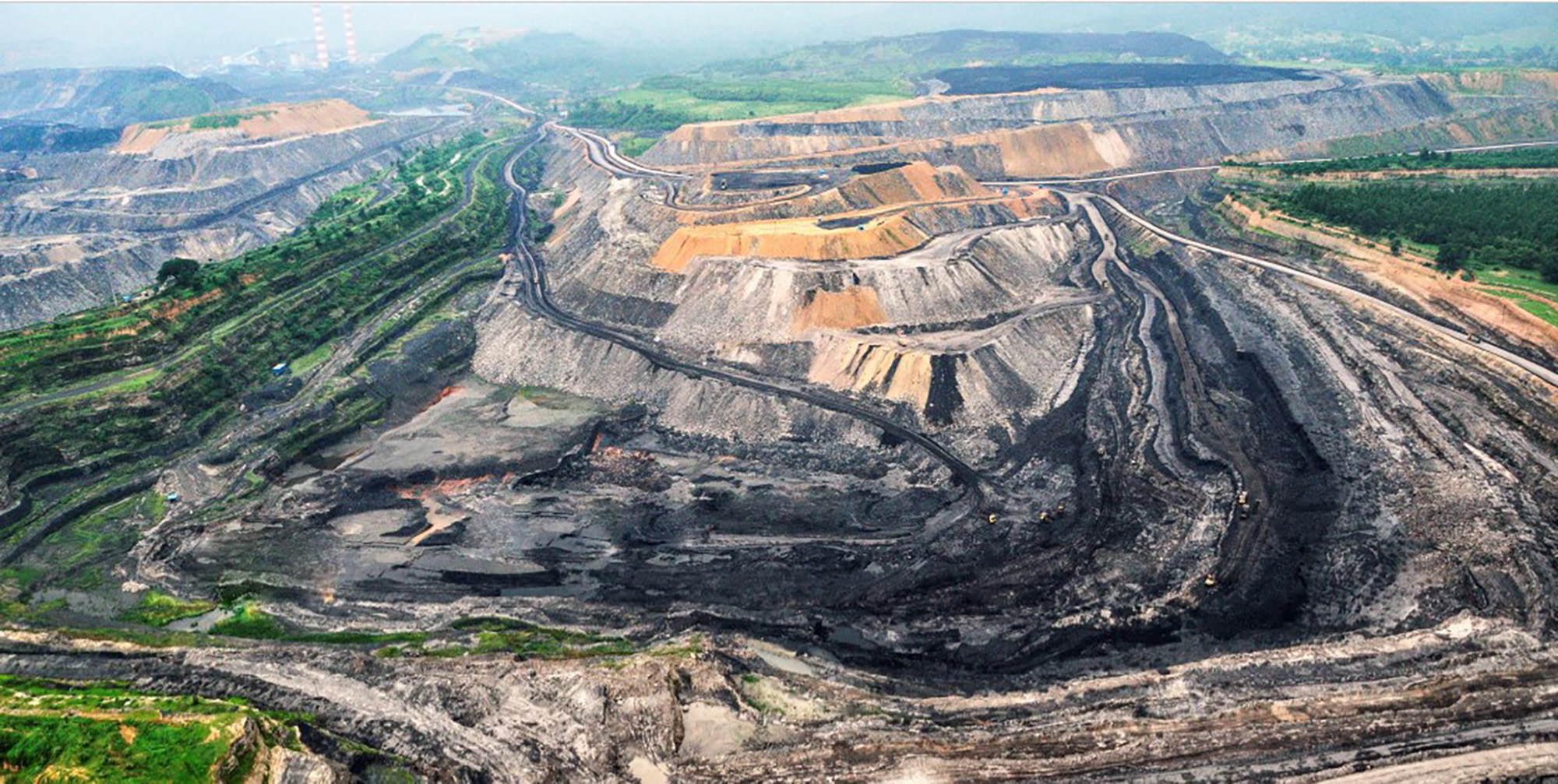
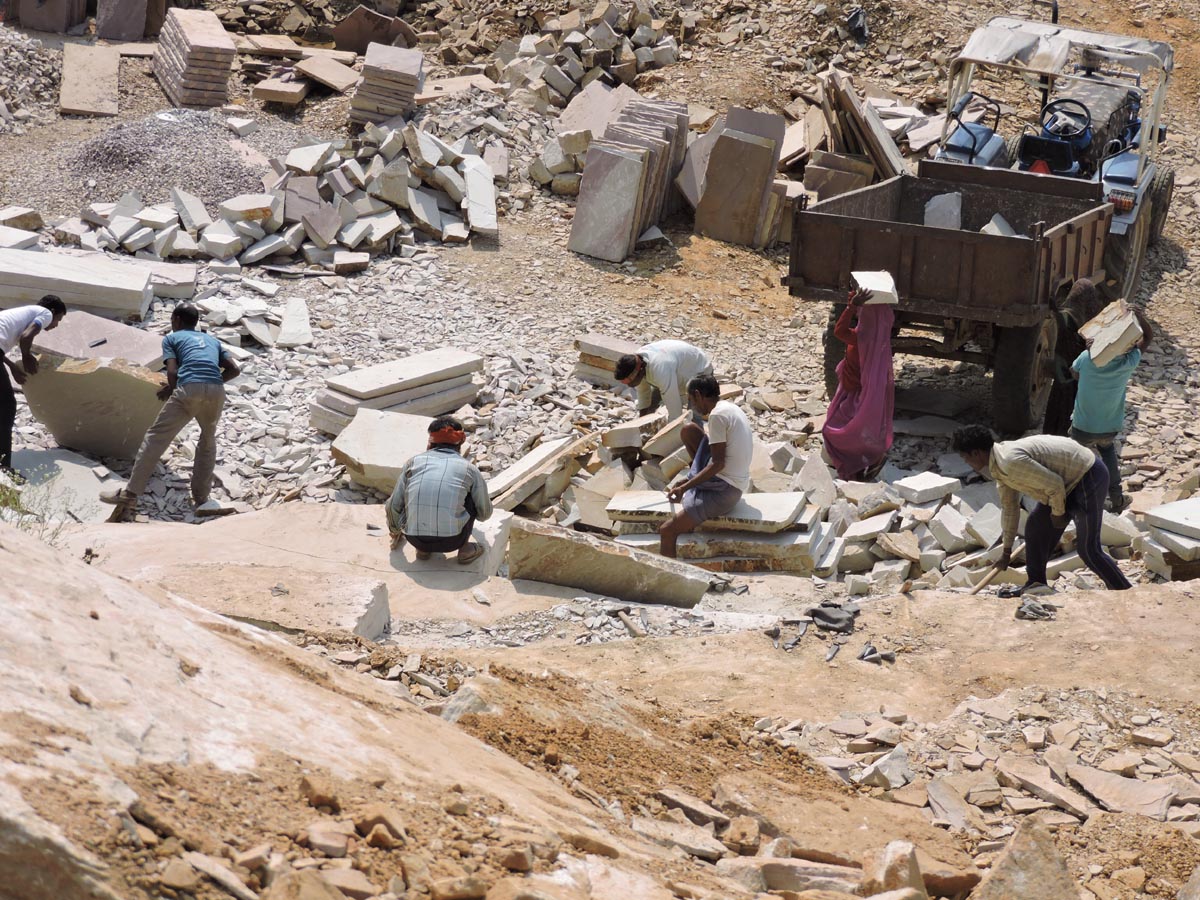
The consequences of illegal mining in the Aravallis extend far beyond the mining sites:
1. Land Degradation
Blasting and excavation permanently alter landforms, destroying hills that took millions of years to form.
2. Water Crisis
Mining lowers groundwater levels, worsens water scarcity, and dries up traditional wells and streams.
3. Air and Noise Pollution
Stone crushing and transportation release fine particulate matter, while blasting causes severe noise pollution affecting nearby settlements.
4. Increased Flood Risk
Removal of natural slopes and vegetation disrupts drainage patterns, increasing flash flooding during monsoons.
These impacts disproportionately affect local communities, farmers, and wildlife while benefiting a small group of illegal operators.
Legal Framework Governing Mining and Environment
India has a strong legal architecture to regulate mining and protect ecosystems, at least on paper.
1. Mines and Minerals (Development and Regulation) Act, 1957
This law regulates mineral extraction and mandates licensing, lease conditions, and penalties for illegal mining.
2. Environment (Protection) Act, 1986
This umbrella legislation empowers the central government to restrict industrial activities in ecologically sensitive areas.
3. Forest (Conservation) Act, 1980
Any non-forest activity, including mining, in forest land requires prior central approval.
4. Punjab Land Preservation Act, 1900
Applicable in parts of Haryana, this law restricts land-disturbing activities such as mining to prevent soil erosion and ecological damage.
Despite these laws, weak enforcement and overlapping jurisdictions have allowed violations to persist.
Supreme Court Intervention in the Aravalli Crisis
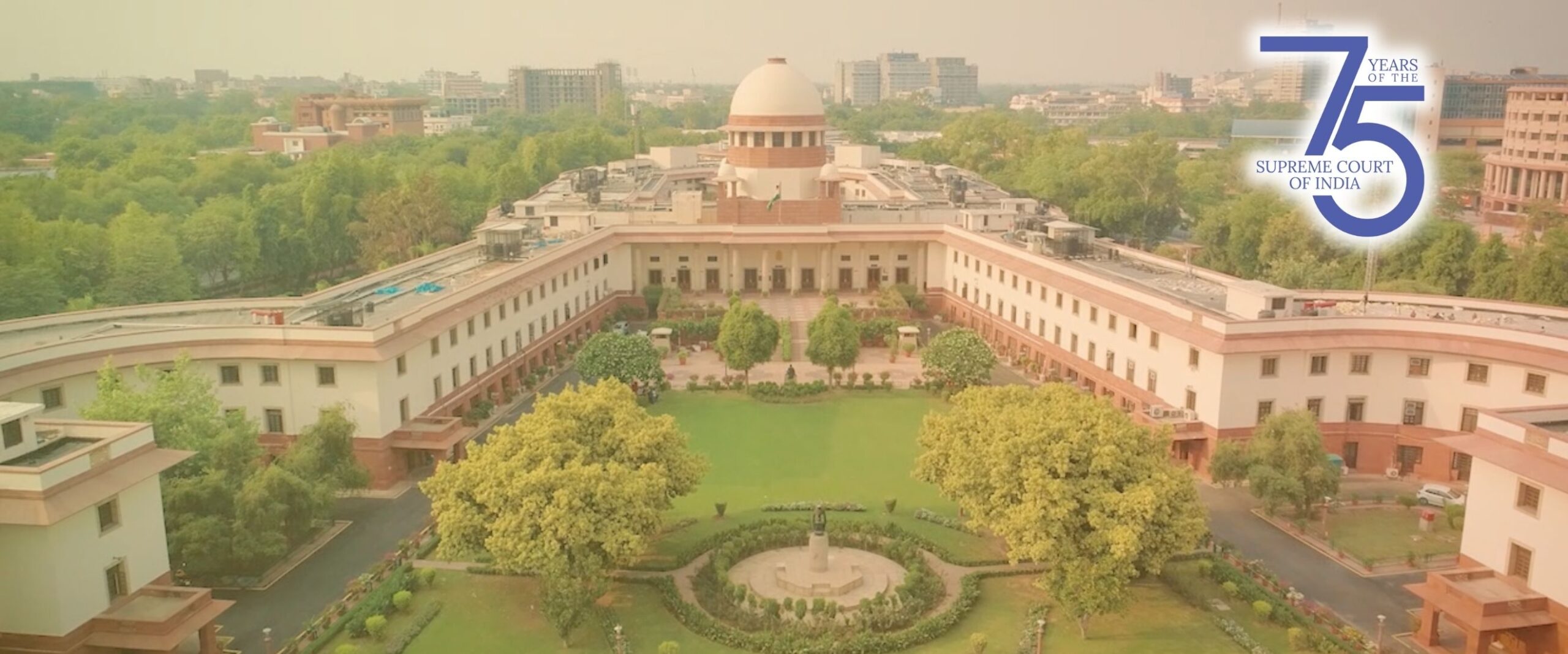

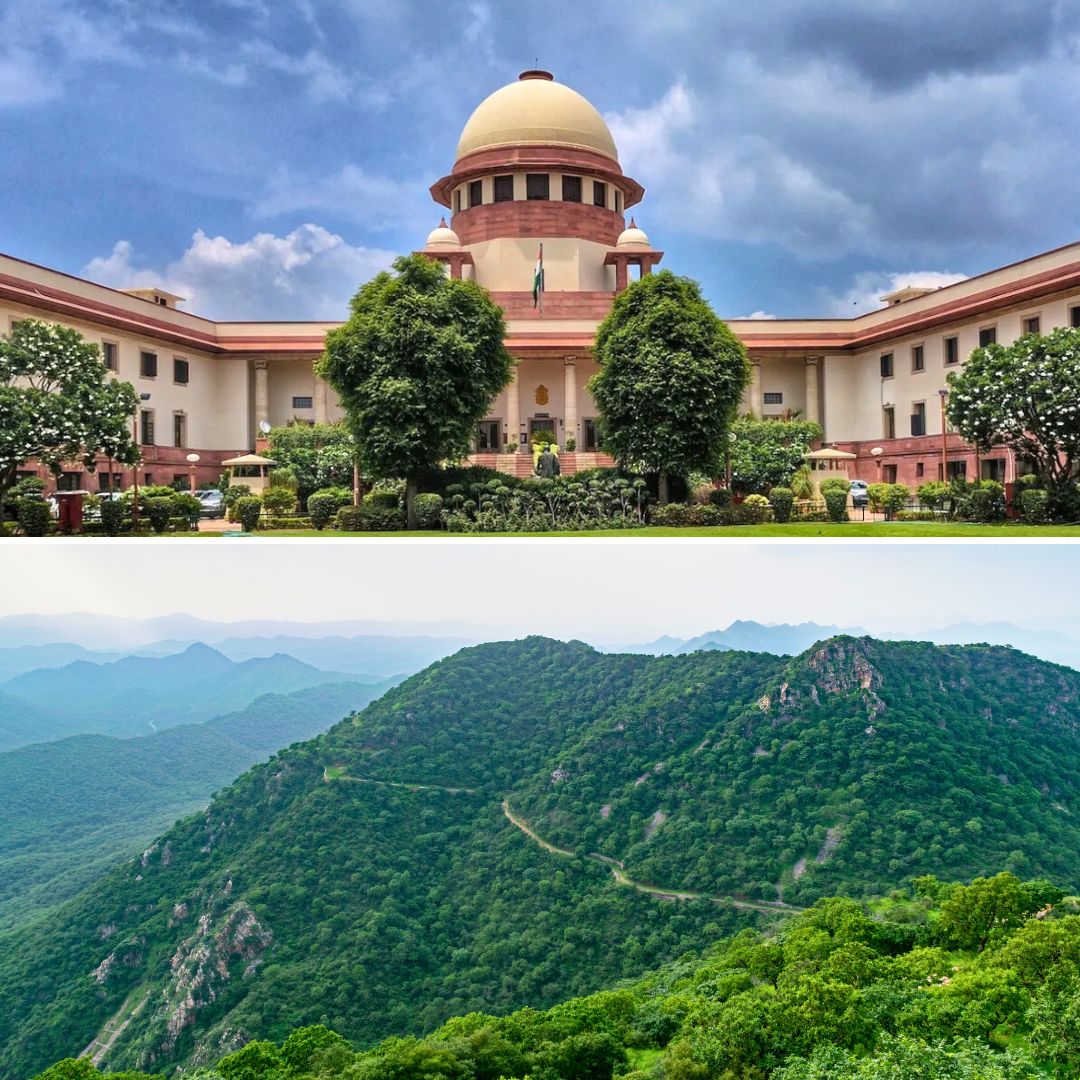
The Supreme Court has repeatedly stepped in to protect the Aravalli ecosystem.
1. Complete Ban on Mining
The Court prohibited mining activities in large parts of the Aravalli range after recognizing their ecological sensitivity. The ban emphasized that economic gains cannot override environmental survival.
2. Clarifying the Definition of Aravallis
One of the major legal challenges has been the lack of a uniform definition of what constitutes the “Aravalli Hills.” States exploited this ambiguity to permit mining in low-lying hill formations.
To address this, the Court directed scientific institutions to define the Aravallis using objective geographical and geological criteria.
3. No New Mining Permissions
The Supreme Court ordered that no new mining leases or approvals be granted in the Aravalli region across multiple states until further review.
4. Sustainable Mining Management Plan
The Court instructed the central government to prepare a scientifically grounded management plan through expert bodies, ensuring that any future activity aligns with environmental sustainability.
These directions reaffirm the Court’s role as a guardian of ecological interests.
Continuing Violations Despite Court Orders
Despite judicial clarity, illegal mining continues due to:
-
Poor inter-departmental coordination
-
Limited ground-level monitoring
-
Political and economic pressure
-
Organized mining mafias
-
Insufficient deterrent penalties
Repeated reports of vehicle seizures, FIRs, and temporary crackdowns show reactive enforcement, not sustained regulation.
This gap between law and implementation remains the biggest threat to the Aravallis.
Environmental Law vs Development Narrative
A common argument used to justify mining is employment generation and infrastructure development. However, this framing ignores long-term costs:
-
Loss of water security
-
Public health impacts
-
Climate vulnerability
-
Restoration expenses far exceeding mining revenue
Environmental law does not oppose development; it demands responsible, science-based decision-making. The Supreme Court’s interventions reinforce the precautionary principle, which requires preventing environmental harm before it occurs.
Way Forward: Protecting the Aravallis
1. Strengthened Monitoring
Satellite surveillance, GPS-tracked mineral transport, and real-time data sharing between agencies can curb illegal operations.
2. Community Participation
Local communities must be empowered as environmental watchdogs rather than excluded from decision-making.
3. Ecological Restoration
Abandoned and damaged mining sites should undergo mandatory restoration, reforestation, and slope stabilization.
4. Stronger Penalties
Illegal mining should attract penalties severe enough to dismantle organized networks, not just recover nominal fines.
5. Policy Consistency
Clear, uniform definitions and long-term conservation policies are essential to prevent legal loopholes.
Conclusion
Illegal mining in the Aravalli Hills represents a systemic failure of environmental governance, not a lack of laws. While the Supreme Court has consistently upheld ecological protection, enforcement gaps continue to undermine judicial intent.
The Aravallis are not expendable terrain; they are natural infrastructure essential to India’s environmental resilience. Protecting them requires political will, institutional accountability, and public vigilance.
If India fails to safeguard this ancient mountain range, the cost will be paid in water scarcity, climate instability, and irreversible ecological loss.